Out of Sight, Out of Mind — and Out of Time: What Your Wisdom Teeth Are Doing Behind the Scenes
There is a particular kind of dental denial that surrounds wisdom teeth. Because they sit so far back in the mouth — largely invisible, rarely felt in day-to-day life — many adults simply set them aside as a problem they will deal with "someday." For a portion of the population, that instinct is harmless. For a significant number of others, however, that quiet assumption allows a slow and preventable deterioration to take root.
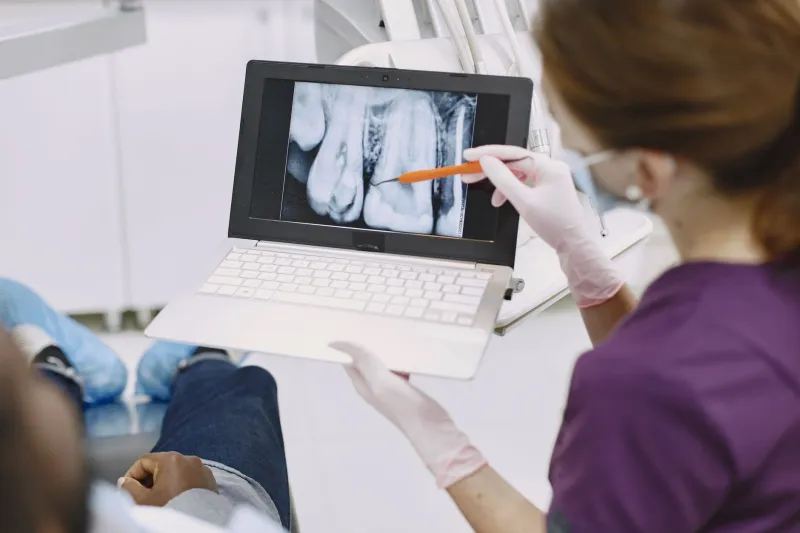
At Pennwell Dental Group, we see this pattern regularly: a patient comes in for a routine cleaning, and imaging reveals that a wisdom tooth no one has thought about in years has been steadily pressing against a neighboring molar, partially trapping food and bacteria, or developing a cyst entirely without symptoms. The absence of pain, it turns out, is not the same as the absence of a problem.
What Wisdom Teeth Actually Are — and Why They Cause So Much Trouble
Wisdom teeth, formally known as third molars, are the last set of permanent teeth to emerge. They typically appear between the ages of 17 and 25, though some people see them arrive later — and some never develop them at all. Evolutionary biologists suggest these molars were once useful to early humans who consumed rougher diets and regularly lost teeth by early adulthood, leaving space for late arrivals. Modern jaws, however, have grown progressively smaller, and modern dental care keeps existing teeth intact far longer. The result is a collision between biology and anatomy: teeth that arrive when there is simply no room for them.
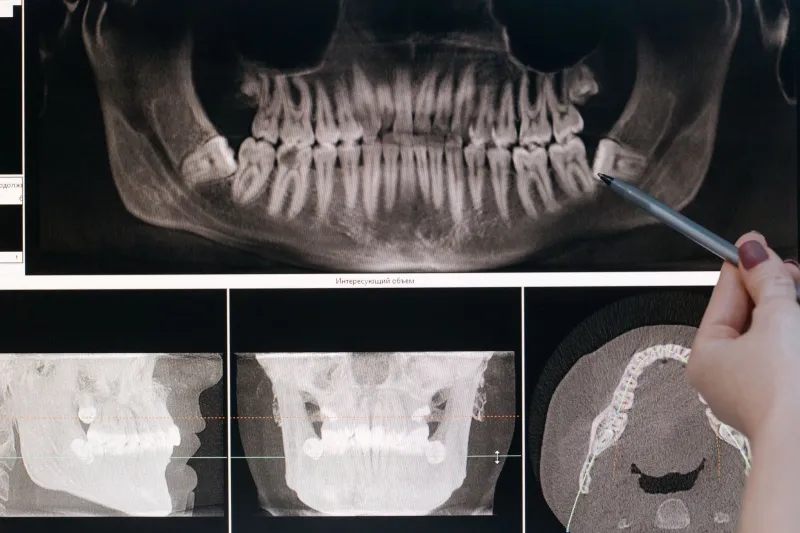
When a wisdom tooth cannot fully emerge — a condition called impaction — it may grow sideways, angle toward the adjacent tooth, or remain partially submerged beneath the gum line. Partial eruption is particularly problematic because it creates a pocket of tissue that is nearly impossible to clean adequately, even with diligent brushing and flossing.
The Hidden Damage That Develops Without Warning
The most misunderstood aspect of wisdom tooth complications is how gradually — and quietly — they develop. Consider the following scenarios that dental professionals observe with regularity:
Crowding and shifting. Pressure from an impacted wisdom tooth can push adjacent teeth out of alignment, undoing years of orthodontic work. Patients who wore braces in adolescence and later notice their front teeth shifting are sometimes surprised to learn that wisdom teeth may be a contributing factor.
Decay in hard-to-reach places. When a wisdom tooth sits at an angle against the molar in front of it, a narrow gap forms that no toothbrush bristle can adequately reach. Decay often develops in this space — affecting not just the wisdom tooth itself, but the healthy molar beside it. Restoring that kind of damage can be considerably more involved than a simple extraction would have been.
Pericoronitis. This is an infection of the soft tissue surrounding a partially erupted wisdom tooth. Because the gum flap over an incompletely emerged tooth acts as a trap for bacteria and food particles, inflammation and infection can develop and recur. In some cases, the infection spreads to surrounding tissue and requires prompt clinical attention.
Cysts and rare but serious complications. Impacted wisdom teeth can occasionally give rise to fluid-filled cysts within the jawbone. Left unaddressed, these cysts can damage adjacent roots, erode bone, and — in rare circumstances — develop into more serious conditions. Routine dental X-rays are the primary tool for catching these developments early.
Debunking the Myths That Keep Patients From Acting
Fear and misinformation are two of the most common reasons patients delay wisdom tooth evaluation. A few persistent myths deserve direct attention.
"The recovery is unbearable." Wisdom tooth extraction has a reputation that significantly outpaces the reality for most patients. While the procedure is a surgical one and recovery does require a few days of rest and care, the majority of people return to normal activity within three to five days. Pain management has improved considerably, and your dental team will walk you through every step of the post-operative process.
"If it's not hurting, it's fine." This is perhaps the most consequential myth of all. As described above, significant damage can accumulate without producing noticeable pain — at least until the problem has advanced well beyond its earliest, most manageable stage.
"I'm too old to have them removed." While it is true that extraction is generally easier in younger patients — when roots are less fully formed and bone is more flexible — adults of any age can and do undergo successful wisdom tooth removal. Age is a factor your dentist will consider, not a barrier.
"They'll just take them all out to make money." Reputable dental providers do not recommend extraction without clinical justification. Many patients are monitored over time rather than immediately scheduled for removal. The goal is always to make the recommendation that genuinely serves your long-term oral health.
When Monitoring Is the Right Approach
Not every wisdom tooth requires removal. Teeth that have fully erupted in proper alignment, are fully functional, and can be cleaned effectively may simply be observed over time through periodic X-rays and examinations. Your dentist will assess factors including the angle of eruption, available space, root development, proximity to nerves, and any early signs of crowding or infection.
The key word in that sentence is observed. Choosing to monitor wisdom teeth is not the same as choosing to ignore them. Regular imaging is essential to catch changes before they become costly problems.
How to Have an Informed Conversation With Your Dentist
If you have not had your wisdom teeth evaluated recently — or if you have been putting off a follow-up your dentist recommended — the most productive step you can take is simply to schedule that appointment and come prepared with questions.
Useful questions to ask include: Are my wisdom teeth currently impacted or at risk of becoming so? Is there any evidence of crowding, decay, or cyst formation? What does monitoring look like, and how often would imaging be needed? If removal is recommended, what does the process involve and what should I expect during recovery?
At Pennwell Dental Group, our approach is to ensure that every patient understands not just what we are recommending, but why — and what the alternatives involve. Wisdom teeth are one of those topics where an honest, thorough conversation early on can spare patients from far more complicated care down the road.
The Smarter Investment Is Often the Earlier One
Dental care, at its best, is preventive. The appointments that feel least urgent are frequently the ones that protect the most. Wisdom teeth are a fitting example: when they are addressed proactively, the conversation is straightforward and the outcome is predictable. When they are left unexamined for years, the conversation often involves decay, bone loss, and adjacent teeth that have been quietly compromised.
Your smile represents years of care — cleanings, checkups, perhaps orthodontics or cosmetic work. Protecting that investment means paying attention to the teeth in the back of the mouth, even when they give you no obvious reason to notice them. Especially then.