What Happens to an Infected Tooth When You Wait: The Real Price of Postponing Root Canal Treatment
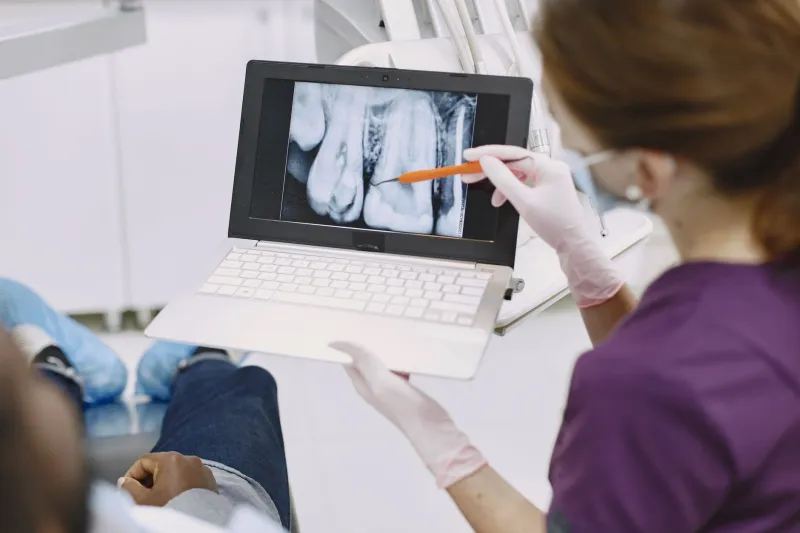
For many Americans, the phrase "root canal" triggers an almost reflexive reaction: anxiety, dread, and a quiet decision to deal with it later. Whether the hesitation stems from cost concerns, a busy schedule, or lingering fear of the procedure itself, delaying treatment is one of the most common choices patients make — and one of the most consequential.
The difficult truth is that a tooth infection does not pause while you weigh your options. Left untreated, the clinical situation almost always becomes more complicated, more painful, and more expensive over time. Understanding what actually happens inside an infected tooth — and what that means for your wallet and your overall health — can reframe the decision in a way that feels less like a burden and more like an act of self-care.
How a Tooth Infection Begins
Root canal treatment becomes necessary when the pulp — the soft tissue at the center of a tooth, containing nerves and blood vessels — becomes infected or irreversibly inflamed. This typically happens as a result of deep decay, a cracked tooth, or repeated dental procedures on the same tooth. In the early stages, a patient may notice sensitivity to hot or cold temperatures, mild discomfort when biting, or a dull ache that comes and goes.
At this point, the infection is contained within the tooth itself. The pulp is compromised, but the surrounding bone and tissue are largely unaffected. Root canal therapy at this stage is straightforward: the dentist removes the infected pulp, cleans and shapes the root canals, and seals the tooth. Recovery is typically smooth, and the tooth can often be preserved for decades with a proper crown placed afterward.
This is the window most patients do not take advantage of — and missing it sets a more difficult course in motion.
The Progression: What Changes When You Wait
As days turn to weeks and weeks turn to months, the infection does not remain static. Bacteria multiply within the sealed chamber of the tooth and begin to travel down the root canals toward the tip of the root, where they exit into the surrounding jawbone.
The body responds to this bacterial invasion with inflammation. A periapical abscess — a pocket of pus at the root tip — may develop. Patients often describe this stage as a significant escalation in pain: a throbbing, persistent ache that may radiate into the jaw, ear, or neck. Swelling in the gum tissue near the affected tooth is common, and some patients develop visible facial swelling.
At this stage, root canal treatment is still possible, but the procedure becomes more involved. The dentist must address the abscess in addition to the internal infection, which may require additional visits, drainage, and antibiotic therapy before the tooth can be fully treated. The cost and complexity of care have already increased measurably.
When the Bone Becomes Involved
If the infection continues to spread unchecked, the jawbone itself can begin to deteriorate. Bacteria and the inflammatory response they trigger cause a process called osteitis — a breakdown of bone tissue around the root. On an X-ray, this appears as a growing dark area at the root tip, a sign that the supporting structure of the tooth is being eroded.
At this stage, patients are no longer dealing with a contained dental infection. They are dealing with a condition that can affect neighboring teeth, compromise the integrity of the jawbone, and, in rare but serious cases, spread to deeper tissues of the head and neck. Dental infections that reach this level of severity have, in documented cases, led to hospitalizations.
Treatment at this stage may no longer be limited to root canal therapy. Extraction may become the only viable option, followed by bone grafting to restore lost tissue and, eventually, a dental implant or bridge to replace the missing tooth. The financial difference between treating an early-stage infection and managing the aftermath of bone loss is substantial — often several thousand dollars.
The True Cost Comparison
One of the most persistent reasons patients delay root canal treatment is cost. It is a legitimate concern, and it deserves an honest response.
A root canal procedure, depending on the tooth and the complexity of the case, typically ranges from approximately $700 to $1,500 in the United States, with a crown adding another $1,000 to $1,800. Dental insurance often covers a meaningful portion of root canal therapy, particularly when the procedure is deemed medically necessary.
By contrast, extracting a tooth and replacing it with a dental implant — the standard of care for a missing tooth — can cost between $3,000 and $5,000 or more per tooth, with bone grafting procedures adding further expense if significant bone loss has occurred. A fixed bridge, while less costly upfront, requires altering the adjacent healthy teeth and carries its own long-term maintenance costs.
When patients weigh the numbers honestly, timely root canal treatment is almost always the more economical path. The tooth is preserved, neighboring teeth remain untouched, and the body is spared the stress of a prolonged infection.
Addressing the Fear Factor
It would be incomplete to discuss delays without acknowledging the role that dental anxiety plays. For many patients, the postponement is not purely financial — it is rooted in fear of pain, fear of the procedure, or a previous difficult experience in a dental chair.
Modern root canal treatment is a far cry from the procedure it was decades ago. With advanced local anesthesia techniques, rotary instrumentation, and in many cases sedation options, most patients report that the procedure itself is no more uncomfortable than having a routine filling placed. The pain patients associate with root canals is, more often than not, the pain of the infection — not the treatment.
At Pennwell Dental Group, we understand that fear is real, and we approach every patient's concerns with genuine respect. Our goal is to give patients the information they need to make decisions that protect both their oral health and their broader well-being — without pressure, and without judgment.
 Photo: Pennwell Dental Group, via caravanasanchezcastro.es
A Practical Path Forward
If you have been putting off a dental appointment because you suspect you may need a root canal, the most important step you can take is to schedule an evaluation. Early diagnosis preserves options. It keeps costs manageable. And it gives your tooth the best possible chance of a long, healthy future in your mouth.
An infected tooth will not heal on its own. Antibiotics can temporarily reduce symptoms, but they do not resolve the underlying problem. Only professional treatment can address the source of the infection and stop the progression that, left unchecked, leads to far more serious consequences.
The decision to seek care sooner rather than later is not just a dental decision — it is a health decision, a financial decision, and an investment in your quality of life. We are here to help you make it with confidence.