Clear Aligners Are Not for Everyone: An Honest Look at Modern Orthodontic Options
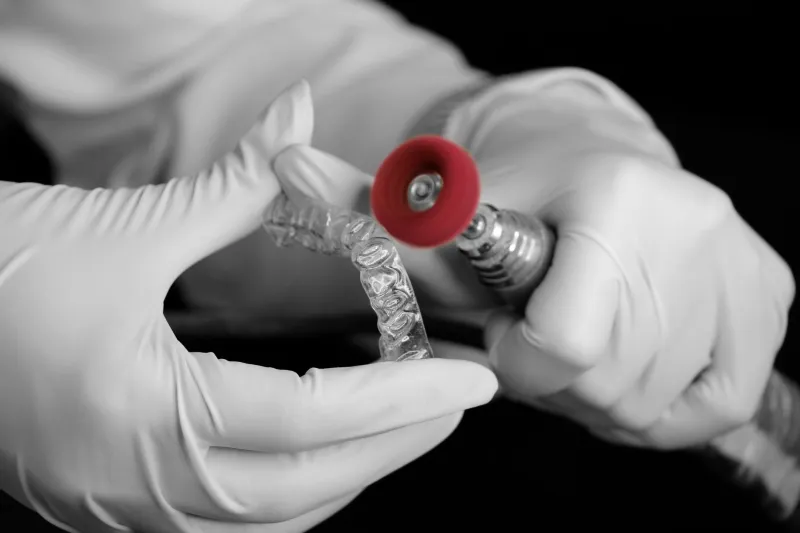
In the span of roughly two decades, clear aligner therapy has moved from a niche orthodontic option to one of the most recognizable treatment categories in all of dentistry. The appeal is understandable. A series of nearly invisible, removable trays that gradually reposition teeth—without the brackets, wires, and dietary restrictions of traditional braces—sounds like an obvious upgrade for adults and older adolescents who need orthodontic correction.
And for many patients, it genuinely is. Clear aligners have helped millions of Americans achieve meaningful improvements in tooth alignment, bite function, and smile aesthetics. The technology behind them has advanced considerably, and in the hands of a skilled clinician, the results can be excellent.
But the enthusiasm surrounding these systems has also generated a great deal of misinformation. Patients arrive at consultations having already decided that clear aligners are the right choice, based largely on advertising, social media content, and the experiences of friends or family members whose cases may bear little resemblance to their own. The role of the dental professional in this environment is not to validate preconceptions—it is to provide an honest, individualized assessment.
This article is an attempt to do exactly that.
What Clear Aligners Do Particularly Well
To be clear: aligner therapy is a legitimate and effective orthodontic modality for a well-defined range of cases. Understanding where it excels helps patients recognize whether they fall within that range.
Clear aligners perform best in cases of mild to moderate crowding, minor spacing issues, and certain types of bite discrepancy that do not require significant vertical or rotational tooth movement. They are especially well-suited to adult patients who have previously undergone orthodontic treatment and experienced some relapse—a common situation in which the original corrections have partially reversed over time.
The removability of aligners is a genuine advantage for many patients. Unlike fixed braces, aligners can be taken out for meals, which eliminates the dietary restrictions that many adults find difficult to manage. Oral hygiene is also considerably easier to maintain, since there are no brackets or wires obstructing access to tooth surfaces. For patients with demanding professional or social schedules, the discretion of a nearly invisible appliance carries real practical value.
Compliance, however, is not optional. Aligners must be worn for twenty to twenty-two hours per day to achieve the intended tooth movement on schedule. Patients who remove them frequently—for comfort, convenience, or social reasons—will experience delayed or incomplete results. This is a point that deserves honest discussion before treatment begins, because compliance failure is one of the most common reasons aligner cases extend well beyond their projected timelines.
Where the Limitations Become Clinically Significant
The cases in which clear aligners are less reliably effective—or genuinely inappropriate—are not always communicated with the same clarity as the benefits. This is worth addressing directly.
Severe crowding or significant bite discrepancies, including substantial overbites, underbites, open bites, and crossbites, are often better addressed with traditional fixed appliances. Braces allow orthodontists to exert more precise and controlled forces on teeth in three dimensions, which is particularly important when complex movements are required. Attempting to correct a severe malocclusion with aligners alone may produce incomplete results, require significantly more refinement trays than originally projected, or ultimately necessitate a transition to braces anyway—at additional cost and time.
Tooth rotation and vertical movement—pulling a tooth upward or pushing it deeper into the jaw—are among the most technically challenging movements for aligner systems to achieve reliably. Attachments, which are small tooth-colored bumps bonded to specific teeth to help the aligner grip and move them, have improved this considerably, but they do not fully close the gap between aligner therapy and traditional orthodontics in complex cases.
Patient age is also a relevant factor. Clear aligners are generally not appropriate for younger children whose dentitions are still developing. For adolescents, they may be suitable depending on the specifics of the case and the patient's demonstrated ability to comply with wear requirements.
The Direct-to-Consumer Aligner Question
No honest discussion of this topic is complete without addressing the category of direct-to-consumer aligner companies—those that offer treatment entirely by mail, without in-person examination, X-rays, or ongoing clinical oversight.
The concerns raised by organized dentistry and orthodontics regarding these services are not merely competitive in nature. They reflect genuine clinical risk. Orthodontic tooth movement has physiological consequences that extend beyond the visible crowns of the teeth. Roots, bone, and the periodontal ligament are all involved in the process, and monitoring their response to treatment requires professional evaluation. Moving teeth without appropriate imaging and examination can, in some cases, result in root resorption, bone loss, or bite changes that create problems requiring far more extensive correction than the original misalignment.
The lower cost of direct-to-consumer options is real, and it is not irrelevant in a country where orthodontic care remains financially out of reach for many patients. But the appropriate response to that access gap is not to eliminate clinical oversight—it is to find ways to make professionally supervised care more accessible. Payment plans, health savings account eligibility, and transparent fee structures are all tools that dental practices can use to help patients access treatment appropriately.
How to Approach the Decision
The most productive starting point for any patient considering orthodontic treatment is a comprehensive consultation with a dentist or orthodontist who will evaluate the actual condition of the teeth, gums, and bone—not simply the visible alignment of the smile.
During that consultation, the right questions to ask include: Am I a good candidate for clear aligners specifically, or would traditional braces produce better results in my case? What is a realistic timeline for my treatment, including the possibility of refinements? What does compliance with this treatment actually require day to day? And what is the long-term retention plan, since all orthodontic treatment—regardless of modality—requires retention to prevent relapse?
At Pennwell Dental Group, we take these conversations seriously. Our commitment is not to recommend the most popular treatment, but to recommend the treatment that is most appropriate for each patient's specific clinical situation. Sometimes that is clear aligners. Sometimes it is traditional braces. Occasionally it is a combination of both, or a phased approach that addresses underlying dental health issues before orthodontic treatment begins.
The goal in every case is the same: a result that is stable, healthy, and genuinely suited to the patient in front of us—not the patient in the advertisement.