Bonding, Veneers, or Crowns: What Your Dentist Actually Considers Before Making a Recommendation
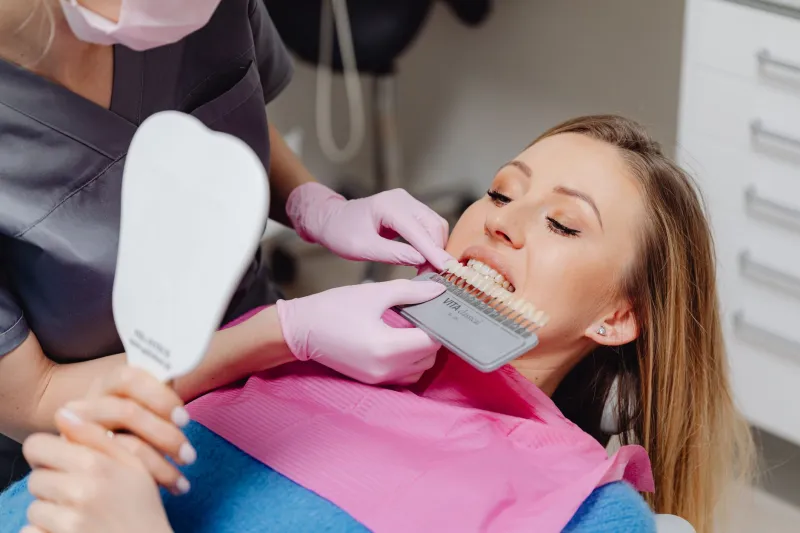
When a tooth is chipped, stained, or misshapen, three restorative options often come up in the same conversation — composite bonding, porcelain veneers, and dental crowns. They can all produce visually similar results in photographs, which makes the decision feel more confusing than it needs to be. But dentists are not choosing between these treatments based on aesthetics alone. Each option serves a distinct clinical purpose, demands a different level of commitment from your natural tooth structure, and carries a very different price tag.
Understanding the reasoning behind these recommendations does not require a dental degree. It requires a clear explanation — which is exactly what this article aims to provide.
Why the "Best-Looking" Option Is Not Always the Right Option
One of the most common misconceptions patients bring into consultations is the belief that the most expensive treatment produces the best result. In some cases, that is true. In others, a simpler, more conservative approach is not only appropriate — it is the clinically superior choice.
Dentists weigh several factors before recommending any cosmetic or restorative procedure: the degree of damage or discoloration, how much healthy tooth structure remains, the patient's bite and jaw alignment, long-term durability expectations, and budget. When all of those variables are considered together, the "right" answer becomes far more specific to the individual than any general guide can predict. That said, understanding how each treatment works gives you the vocabulary to have a more productive conversation with your provider.
Composite Bonding: The Conservative Starting Point
Composite bonding involves applying a tooth-colored resin material directly to the surface of a tooth, sculpting it into the desired shape, and hardening it with a curing light. The entire process typically takes place in a single appointment, requires little to no removal of natural enamel, and costs significantly less than the alternatives — often ranging from $300 to $600 per tooth depending on the practice and region.
Bonding works particularly well for:
- Small chips or cracks along the edge of a tooth
- Minor gaps between front teeth
- Slight shape irregularities
- Localized staining that has not responded to whitening
The trade-off is durability. Composite resin is more susceptible to staining over time and is not as strong as porcelain or ceramic materials. Patients who grind their teeth, bite their nails, or chew on hard objects frequently may find that bonding chips or wears down within a few years. In low-stress areas of the mouth and for patients with relatively mild concerns, however, bonding offers excellent results with minimal intervention.
If your dentist recommends starting with bonding, that is not a compromise — it is often the most responsible recommendation available.
Porcelain Veneers: Precision Aesthetics for the Right Candidate
Veneers are thin shells of porcelain custom-fabricated to fit over the front surface of a tooth. They are permanently bonded in place and, because they require the removal of a small amount of enamel to sit flush against the tooth, they represent a permanent alteration to the natural tooth structure. Once enamel is removed, it cannot regenerate — meaning veneers will always need to be replaced at some point in the future.
That level of commitment is appropriate when the clinical situation calls for it. Veneers are well-suited for:
- Teeth with moderate to severe intrinsic staining that whitening cannot address (such as staining from tetracycline or fluorosis)
- Multiple teeth with size, shape, or color inconsistencies across the smile line
- Slightly misaligned teeth where orthodontic treatment is not desired
- Patients who want a durable, long-lasting cosmetic solution with a natural appearance
Porcelain veneers typically cost between $1,000 and $2,500 per tooth and, with proper care, can last fifteen years or longer. Because they cover only the front surface, they are not appropriate for teeth with significant structural damage, large existing fillings, or active decay.
A patient who needs only one tooth corrected and has otherwise healthy enamel may find that bonding achieves a comparable result at a fraction of the cost. Veneers make the most sense when multiple teeth are involved or when the degree of cosmetic concern exceeds what bonding can reliably address.
Dental Crowns: Restoration First, Aesthetics Second
A crown — sometimes called a cap — encases the entire visible portion of a tooth above the gum line. It is fabricated from porcelain, ceramic, metal, or a combination of materials, and it requires the most significant reduction of natural tooth structure of the three options. That reduction is not a drawback so much as a clinical necessity.
Crowns are the appropriate choice when:
- A tooth has sustained significant structural damage from decay, fracture, or previous large fillings
- A tooth has undergone root canal treatment and requires reinforcement
- The remaining natural tooth structure is insufficient to support a veneer or bonding
- A tooth is severely misshapen or worn down beyond what surface-level treatments can address
Modern all-ceramic crowns are highly aesthetic and, in most cases, indistinguishable from natural teeth. They are also the most durable of the three options, commonly lasting ten to fifteen years and sometimes considerably longer. Costs vary widely — typically between $1,000 and $3,500 per tooth — depending on materials, geographic location, and whether additional procedures such as a buildup or post are required.
It is worth being direct on one point: recommending a crown on a tooth that could be adequately restored with bonding or a veneer is not sound clinical practice. If a dentist is recommending a crown on a tooth with minimal damage and no structural compromise, it is entirely reasonable to ask why a more conservative option is not appropriate in your specific case.
A Framework for Your Next Consultation
Rather than arriving at your appointment uncertain about which direction to take, consider asking your dentist these questions:
1. How much healthy tooth structure will this treatment require me to sacrifice? This helps you understand the long-term implications of each option.
2. Is there a more conservative treatment that would achieve a similar result? A good clinician will explain the trade-offs honestly rather than defaulting to the most involved procedure.
3. What is the expected lifespan of this restoration, and what does maintenance look like? Durability expectations vary considerably between materials and individual patients.
4. Does my bite or jaw alignment affect which option is most appropriate? Patients who clench or grind may need additional considerations before any cosmetic work is undertaken.
5. Are there any underlying issues — decay, gum disease, bite problems — that should be addressed first? Cosmetic work performed on an unhealthy foundation is unlikely to produce lasting results.
The Value of an Informed Patient
At Pennwell Dental Group, we believe that a well-informed patient makes better decisions — not just in the dental chair, but in terms of long-term oral health outcomes overall. The goal of any cosmetic or restorative recommendation should be to match the appropriate level of intervention to the actual clinical need, not to default to the most comprehensive or costly option available.
 Photo: Pennwell Dental Group, via www.randdairy.co.za
Composite bonding, porcelain veneers, and dental crowns each have a legitimate place in modern dentistry. Understanding when each one is genuinely warranted allows you to approach your consultation as an active participant rather than a passive recipient of recommendations.
If you have a tooth that is bothering you — whether for cosmetic or functional reasons — the most important first step is a thorough evaluation by a qualified provider. From there, the right path forward becomes considerably clearer.