What a $150 Cavity Becomes When You Wait: The True Price of Delayed Dental Care
The Cavity You Decided to Wait On Is Not Staying the Same Size
There is a common misconception embedded in the way many Americans approach dental care: that a cavity, once identified, can be monitored rather than treated — that it will remain small and manageable until a more convenient time arrives. Dentists hear this reasoning often. "It's not bothering me yet." "I'll deal with it after the holidays." "I can't afford it right now."
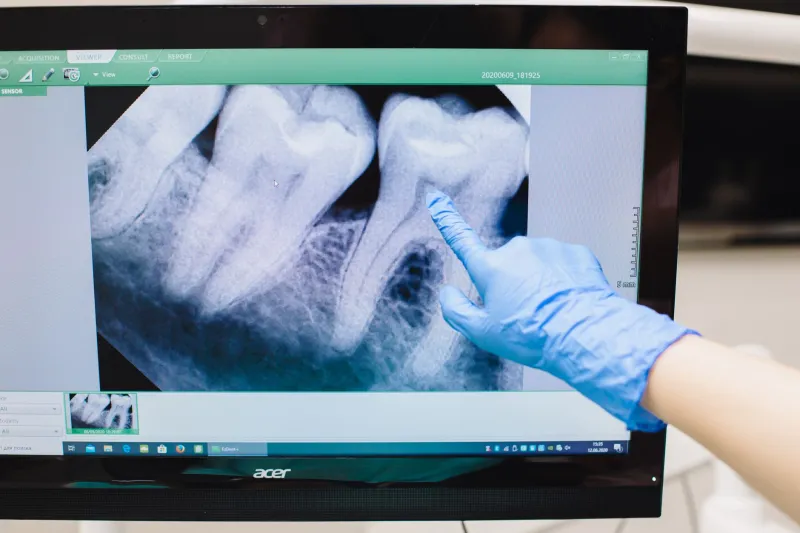
The problem is that tooth decay does not pause while you deliberate. It progresses, often silently, through the enamel, into the dentin, and eventually toward the pulp — the living interior of the tooth. Each stage of that progression corresponds to a significant increase in both the complexity of treatment required and the cost of restoring the tooth. What begins as a simple filling can, within months to a year or two, evolve into a situation requiring a root canal, a crown, or in the worst cases, extraction followed by an implant or bridge.
Understanding this trajectory is not meant to alarm. It is meant to reframe the conversation around what it actually means to "save money" by deferring dental care.
The Numbers Behind the Decision
A composite resin filling for a small cavity typically ranges from $150 to $300, depending on location, the tooth involved, and whether insurance is applied. That figure is the baseline — the cost of treating decay while it is still confined to the enamel or the surface layer of dentin.
Leave that same cavity untreated for six months to a year, and the decay deepens. At this stage, the restoration becomes more complex. A larger filling, or the beginning of structural compromise, may push costs to $300–$500 out of pocket.
Allow it to progress further — into the inner dentin or toward the pulp — and a root canal becomes necessary. Root canal therapy, which involves removing the infected pulp tissue and sealing the canal, typically costs between $700 and $1,500 depending on which tooth is involved. Molars, with their multiple root canals, sit at the higher end of that range. A crown, which is almost always required after a root canal to protect the treated tooth, adds another $1,000 to $1,800.
In a worst-case scenario, if the tooth cannot be saved, extraction and implant placement can run between $3,000 and $6,000 for a single tooth — all to address what began as a $200 cavity.
Those numbers represent a compounding financial penalty for delay. And they do not account for the additional costs many patients overlook entirely.
Lost Productivity and the Workday You Did Not Plan to Miss
Dental pain is not a minor inconvenience. When decay reaches the pulp, the resulting infection can cause severe, debilitating discomfort that makes concentration impossible, disrupts sleep, and forces emergency dental visits — often at premium after-hours rates. The American Dental Association has estimated that dental emergencies account for over 2 million emergency room visits annually in the United States, many of which are the result of infections that had been developing over months.
Beyond the emergency visit itself, consider the downstream effects: missed workdays, reduced productivity in the days surrounding an acute dental episode, and the logistical disruption of scheduling urgent care in the middle of an already busy life. For hourly workers or self-employed individuals, a single missed workday can represent a financial loss that dwarfs the cost of the original filling.
For parents, there is an additional layer. A child with untreated tooth pain frequently misses school. Studies from the Centers for Disease Control and Prevention have found that dental issues are among the leading causes of school absenteeism in American children — a ripple effect that touches the whole household.
The Systemic Connection That Changes the Calculation Entirely
The financial analysis above focuses on the tooth itself. But the cost of untreated dental decay does not stay confined to the mouth.
Oral bacteria from infected teeth and inflamed gum tissue have well-documented pathways into the bloodstream. Research has established associations between chronic oral infections and systemic conditions including cardiovascular disease, poorly controlled diabetes, respiratory infections, and adverse pregnancy outcomes. While causality is still an active area of study, the biological plausibility is clear: the mouth is not a sealed compartment. What happens inside it affects the body it is attached to.
For patients managing chronic conditions, this connection is particularly significant. An untreated dental infection can complicate blood sugar regulation in diabetic patients, making an already demanding condition more difficult to manage. For individuals with certain heart conditions, oral bacteria present a recognized risk that cardiologists and dentists alike take seriously.
The downstream medical costs associated with these systemic complications are difficult to quantify precisely — but they are real, and they are avoidable.
Why Preventive Care Is the Investment Most Americans Undervalue
Two dental cleanings and examinations per year typically cost between $200 and $400 total, often covered in full or in large part by dental insurance. During those visits, a dentist can identify decay in its earliest stages — sometimes before it has even broken through the enamel surface — and address it at the lowest possible cost and complexity.
Yet roughly one-third of American adults did not visit a dentist in the past year, according to data from the National Institute of Dental and Craniofacial Research. The reasons are varied: cost, time, anxiety, and a cultural tendency to treat dental care as optional rather than essential. For many, the dental chair feels like a discretionary expense rather than a health investment.
This framing is worth examining. No one considers skipping a car oil change a financially sound strategy. The logic of preventive maintenance — addressing small issues before they become large ones — is universally accepted in virtually every other context. Oral health deserves the same framework.
The Conversation Worth Having Before the Pain Starts
At Pennwell Dental Group, we have seen the full spectrum of this story play out in our patient community. We have seen small cavities caught early and resolved in a single appointment. We have also seen patients arrive in significant pain, facing treatment plans that extend over multiple visits and thousands of dollars — all because a manageable problem was allowed to compound.
The goal of raising this issue is not to generate anxiety. It is to offer clarity. If cost is a barrier to treatment, many dental practices — including ours — offer payment plans and financing options that make timely care accessible. If time is the obstacle, modern restorative dentistry is faster and more comfortable than most patients expect.
The cavity you are waiting on is not waiting for you. Addressing it now, at its current stage, is nearly always the most financially sound and medically responsible decision available to you.