The Hidden Costs of Over-the-Counter Whitening: What Dentists Are Seeing in Patients Who DIY'd Their Smile
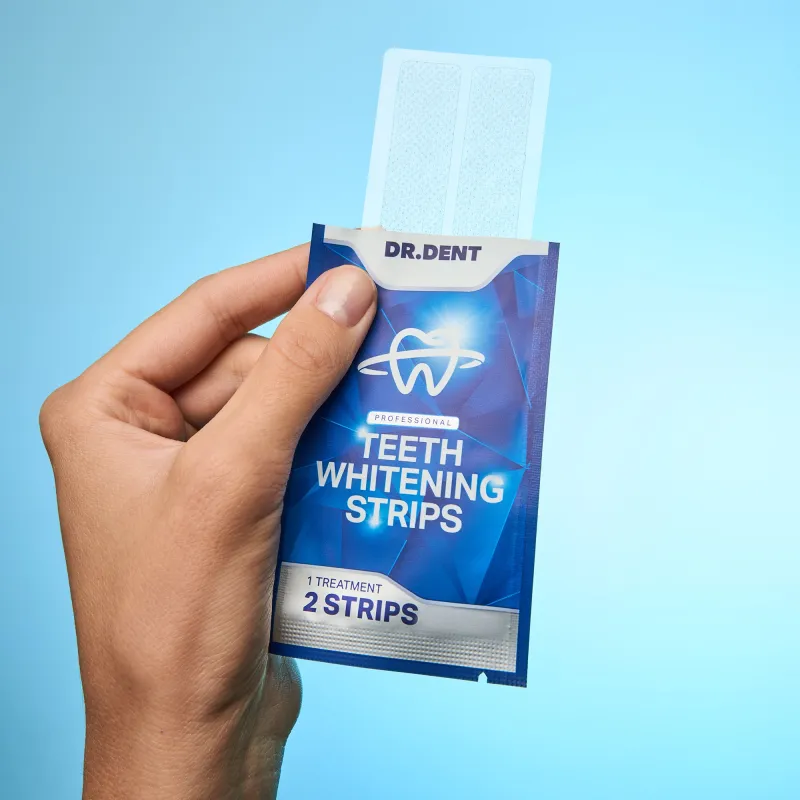
Photo: teeth whitening strips over the counter products dental comparison professional, via shop.drdent.co
The whitening aisle at any American drugstore is a confident display of optimism. Strips, trays, pens, rinses, LED-accelerating kits — the options multiply each year, and the packaging promises results that sound nearly clinical in their precision. "Up to 10 shades whiter." "Professional-grade formula." "Enamel-safe."
For consumers who want a brighter smile without the perceived expense or inconvenience of a dental appointment, these products represent an attractive proposition. And in straightforward cases, some of them deliver modest, temporary improvements without incident.
But dentists across the country are seeing a pattern in their examination chairs that the whitening aisle does not advertise: patients who have used over-the-counter products aggressively, repeatedly, or incorrectly — and who have arrived with damage that requires professional intervention to address. The costs of that intervention, in both money and clinical complexity, frequently exceed what thoughtful professional whitening would have cost from the outset.
What Over-the-Counter Whitening Products Actually Contain
The active ingredient in virtually all teeth-whitening products, prescription or over-the-counter, is a peroxide compound — either hydrogen peroxide or carbamide peroxide, which breaks down into hydrogen peroxide upon contact with tissue. The fundamental chemistry is the same across product categories. What differs is concentration, delivery mechanism, duration of contact, and — critically — the clinical oversight present during treatment.
Over-the-counter strips and trays typically contain hydrogen peroxide concentrations ranging from 6 to 10 percent. Professional in-office treatments use concentrations of 25 to 40 percent, applied under controlled conditions with protective barriers for the gums and careful monitoring of contact time. Take-home professional systems prescribed by a dentist use custom-fitted trays that minimize gel contact with soft tissue and allow for precise dosing.
The lower concentration of consumer products is not, by itself, the problem. The problem is the behavior that low-cost, low-barrier access tends to encourage: overuse, extended application times, and the absence of any professional assessment of whether whitening is appropriate for a given patient's oral condition.
The Damage Dentists Are Documenting
Several categories of harm appear with notable regularity in patients who have relied heavily on over-the-counter whitening.
Enamel erosion and demineralization. Peroxide compounds, particularly when used at elevated frequencies or for durations exceeding product instructions, can disrupt the mineral structure of enamel. The surface becomes rougher and more porous — a condition that paradoxically makes teeth more susceptible to future staining while simultaneously increasing sensitivity. Once enamel is lost, it does not regenerate. The body has no mechanism for replacing it.
Gum irritation and chemical burns. Consumer whitening strips and ill-fitting generic trays inevitably allow gel to contact the gingival tissue. Repeated exposure produces chemical irritation that ranges from mild redness and sensitivity to more significant soft-tissue damage. Patients who have used these products daily or near-daily for extended periods sometimes present with gum recession that requires evaluation and, in some cases, treatment.
Uneven whitening and blotchy results. Whitening chemistry acts only on natural tooth structure — it has no effect on crowns, veneers, bonding material, or porcelain restorations. Patients who are unaware of this distinction, or who have not had a dental examination to identify existing restorations, may achieve dramatically uneven results: natural teeth several shades lighter while restorations remain their original color. Correcting this disparity requires either replacing the restorations to match the new shade or retreating the natural teeth — neither of which is inexpensive.
Exacerbation of underlying conditions. Whitening is contraindicated in patients with active decay, cracked teeth, exposed root surfaces, or severe gum recession. Peroxide penetrating a cavity or a cracked tooth can cause acute pulpal inflammation — a sharp, lingering pain that may ultimately require root canal treatment. Without a prior examination, consumers have no reliable way to assess whether their teeth are structurally sound enough for whitening treatment.
The True Cost Comparison
Over-the-counter whitening products range from a few dollars for basic strips to upwards of $60 or $70 for LED-enhanced kit systems. At first glance, the contrast with professional whitening — which can range from approximately $300 to $1,000 depending on the method and the provider — appears to strongly favor the consumer product.
But this calculation collapses when repair costs enter the equation. A patient who develops significant sensitivity from repeated strip use may require desensitizing treatment, fluoride therapy, and dietary modifications. A patient who whitens over undetected decay may require root canal treatment and a crown. A patient whose restorations no longer match their natural teeth may need to replace multiple veneers or crowns to achieve a harmonious result.
In clinical practice, these are not hypothetical scenarios. They are the outcomes that motivate patients to finally schedule the examination they had been deferring — often with damage already done.
A Decision Framework for Choosing the Right Approach
Not every patient who wants a whiter smile needs in-office treatment. The right choice depends on several variables that a brief consultation with a dental provider can clarify.
Start with an examination. Before any whitening — professional or consumer — a dental evaluation establishes whether the teeth and gums are healthy enough to tolerate the treatment. This step is not optional; it is the foundation of safe whitening care.
Understand what you are trying to correct. Extrinsic staining from coffee, tea, red wine, or tobacco responds well to professional whitening. Intrinsic discoloration — staining that originates within the tooth structure, often from tetracycline use, fluorosis, or trauma — does not respond to peroxide-based whitening and requires alternative cosmetic approaches such as veneers or bonding.
Consider professional take-home systems. For patients who prefer the convenience of at-home treatment, dentist-prescribed take-home kits offer a meaningful middle path. Custom-fitted trays ensure precise gel placement, minimize gum exposure, and allow the dentist to monitor progress and address sensitivity as it arises. The cost is substantially lower than in-office treatment while providing significantly more clinical control than consumer products.
Respect the maintenance reality. Whitening results are not permanent regardless of the method used. Dietary habits, aging, and the natural porosity of enamel all contribute to re-staining over time. A professional whitening plan includes a realistic maintenance strategy — one that avoids the cycle of repeated over-the-counter applications that drives cumulative damage.
Brightness Should Not Come at the Expense of Health
At Pennwell Dental Group, we support every patient's interest in a smile that looks and feels its best. Teeth whitening, when approached thoughtfully and with appropriate professional guidance, is a safe and effective cosmetic treatment. The goal of this conversation is not to discourage the pursuit of a brighter smile — it is to ensure that the pursuit does not inadvertently compromise the dental foundation that makes that smile possible.
If you have been using over-the-counter whitening products and have questions about sensitivity, results, or whether your teeth are in the right condition for treatment, a conversation with your dentist is the most direct path to an answer. The appointment costs far less than the alternative.